Pilot Operated Hydraulic Control Pressure Reducing Valve

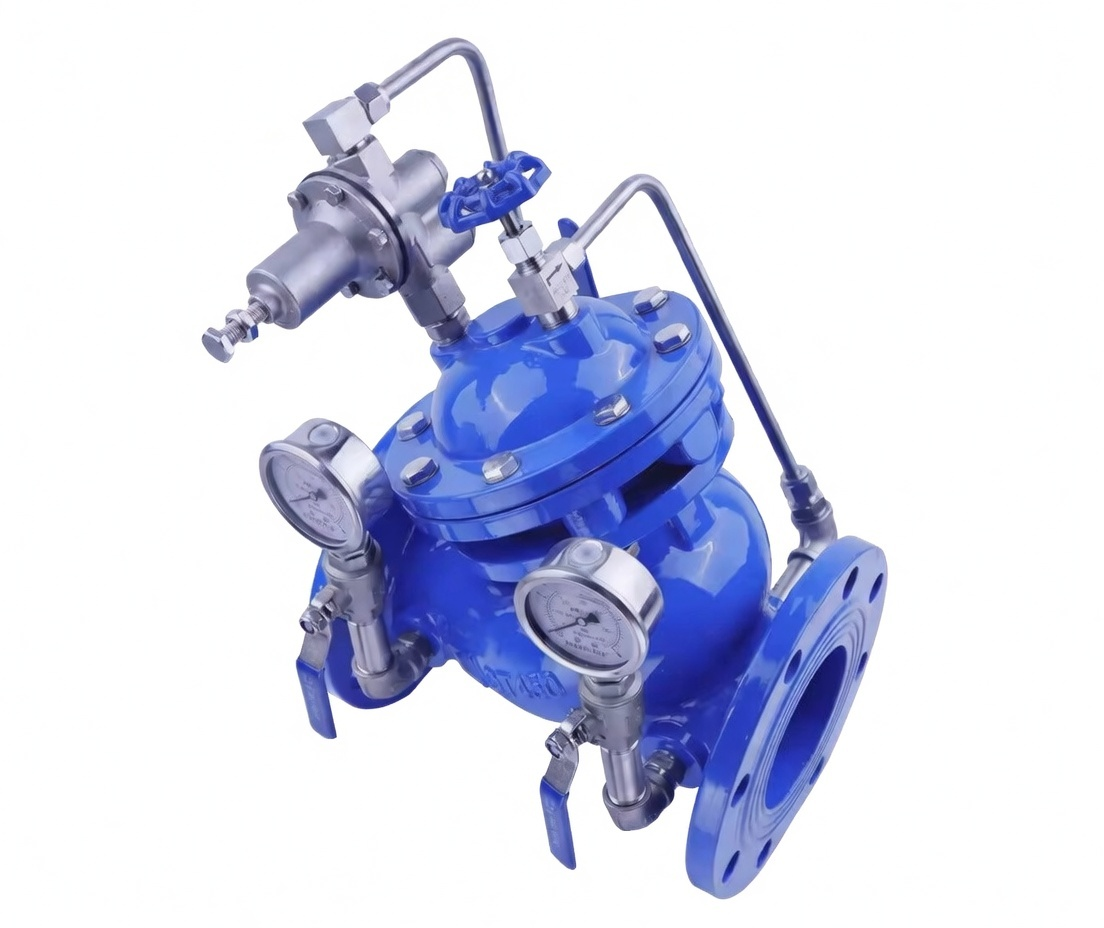
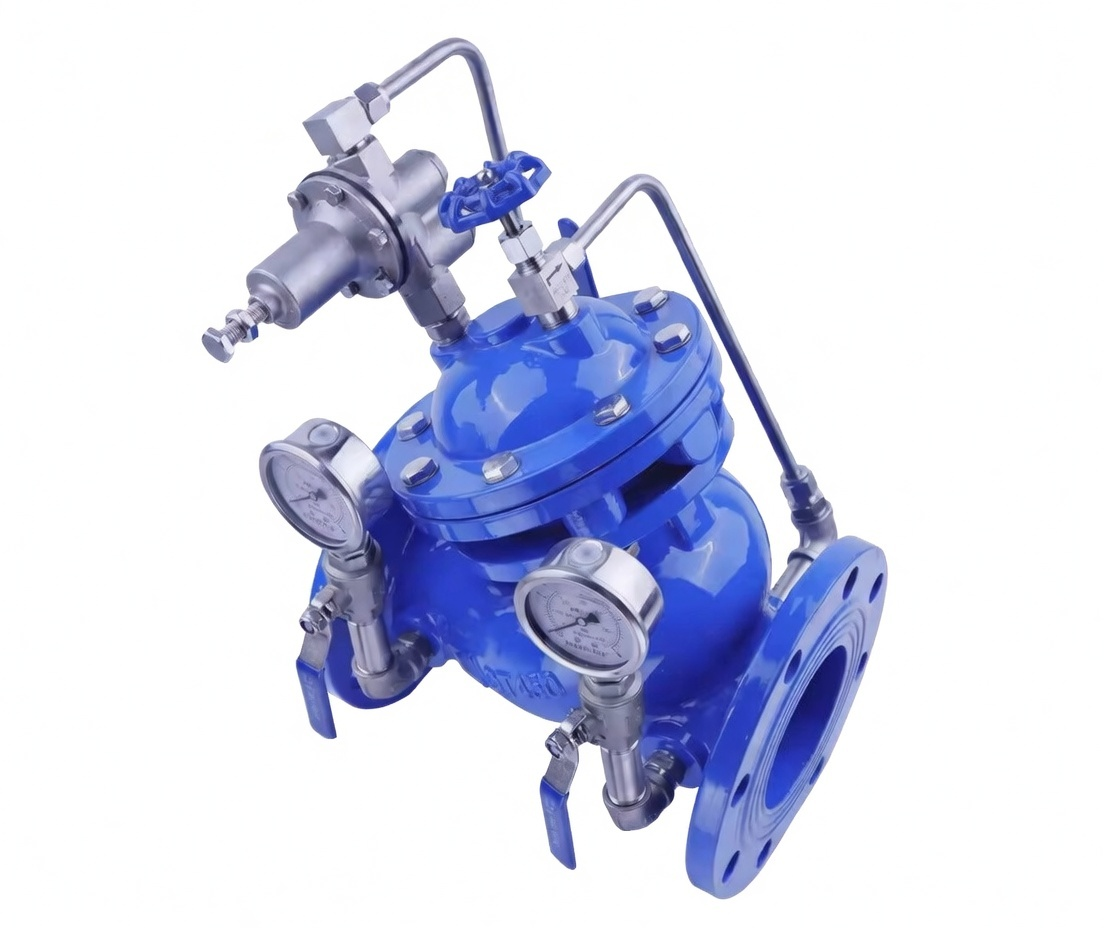
The pilot-operated hydraulic control pressure reducing valve is a high-performance, flanged industrial valve engineered for reliable downstream pressure regulation in water supply, hydraulic systems, irrigation, fire protection, and process piping. Its ductile iron body features a durable blue epoxy coating for superior corrosion resistance, while the adjustable pilot assembly, dual pressure gauges (inlet/outlet), and stainless-steel trim ensure precise control and easy monitoring. Diaphragm-actuated design delivers stable outlet pressure (typically 15โ€“175 psi) across varying flows and inlet conditions, with high flow capacity, low hysteresis, and straightforward in-line maintenance. Ideal for protecting equipment and maintaining consistent system performance.

Description

This is a pilot-operated hydraulic control pressure reducing valve (also commonly called a pilot-operated pressure reducing valve or hydraulic pressure regulator valve). This is a type of industrial valve designed to automatically reduce and regulate high inlet (upstream) pressure to a lower, stable outlet (downstream) pressure, regardless of fluctuations in the inlet pressure or changes in flow demand.

These are widely used in hydraulic systems, water supply networks, fire protection systems, irrigation, industrial process piping, and fluid power applications to protect downstream equipment from overpressure, maintain consistent operating pressure, or enable multi-pressure circuits from a single pump source.

These valves are pilot-operated (not direct-acting), meaning a small pilot circuit (with adjustable components like a pilot valve, spring, and sometimes a needle valve or restrictor) senses and controls the main valve diaphragm or piston.

This design allows for:

  • Higher flow capacity
  • Better stability and accuracy
  • Larger pressure reduction ratios
  • Lower hysteresis and flatter pressure-flow characteristics compared to direct-operated types

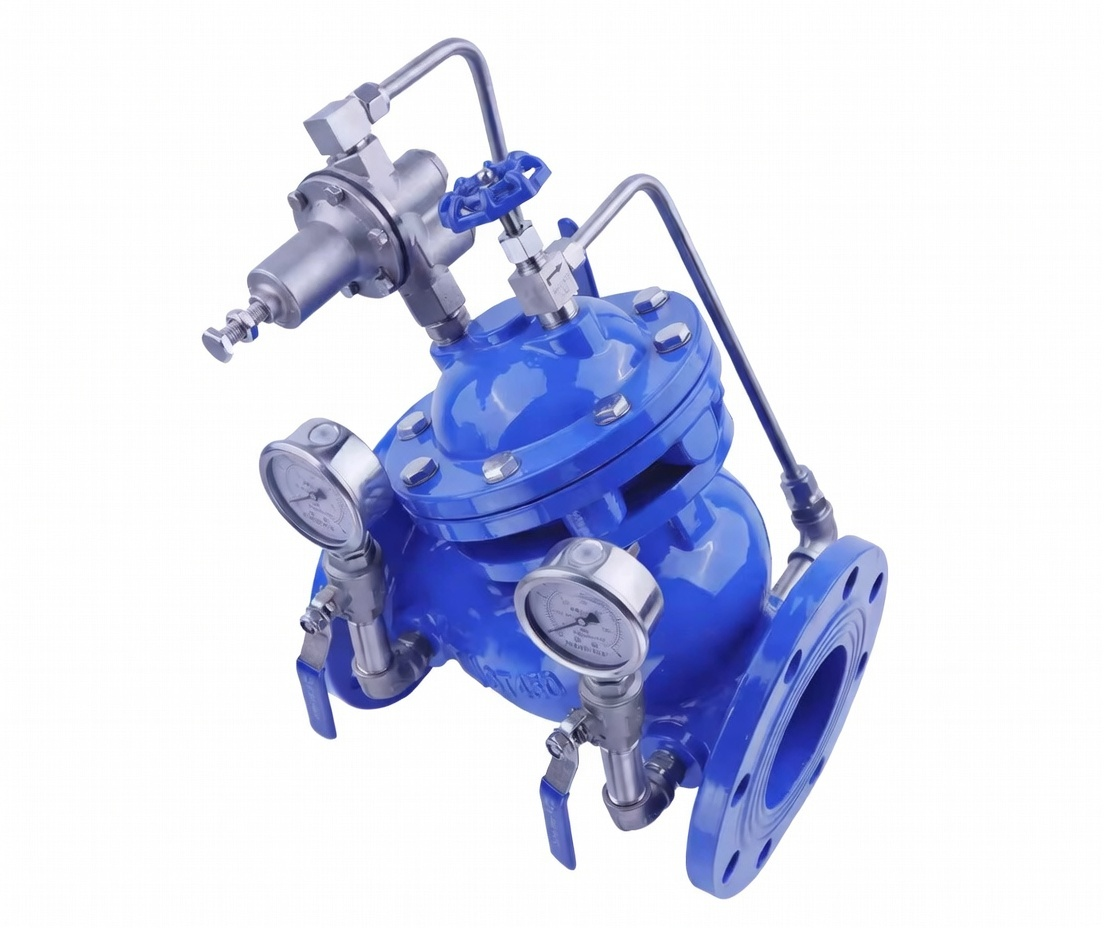
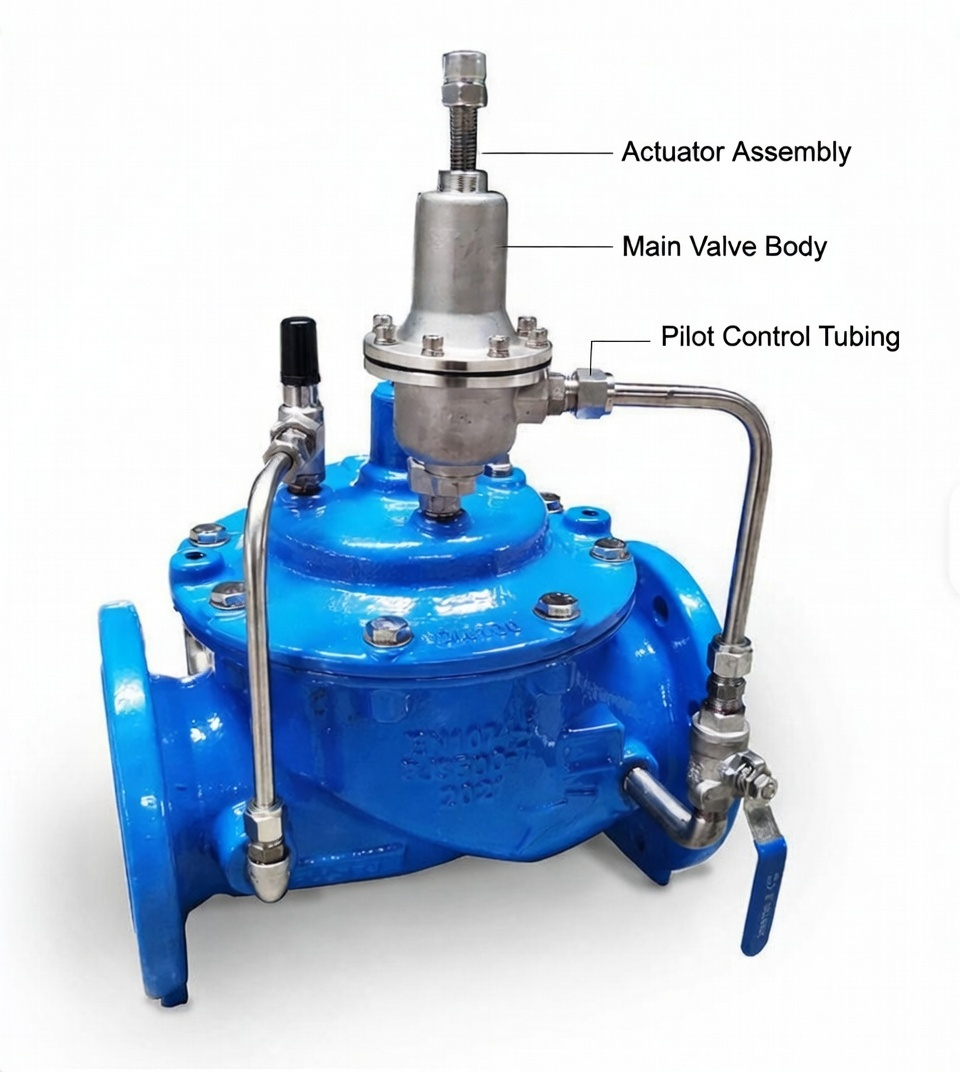
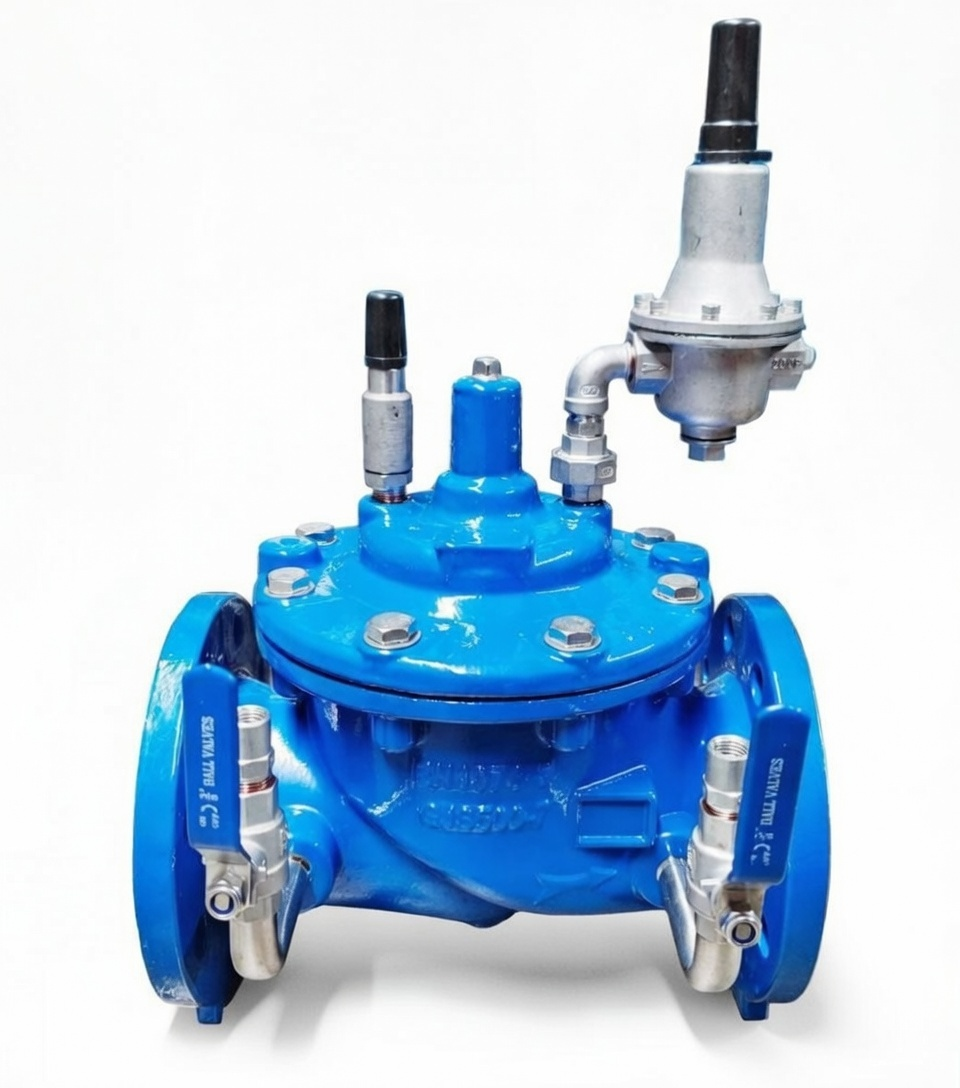
The valve body is flanged (likely ANSI/DIN standard flanges for easy piping connection), painted bright blue (common for water or general industrial use to indicate potable/non-hazardous service), and features:

  • A large main body/bonnet (dome-shaped top for the diaphragm chamber)
  • Dual pressure gauges (one for inlet pressure, one for outlet/controlled pressure)
  • Pilot assembly on top (with adjustable screw/handle for setting the reduced pressure, often a handwheel or knob)
  • Small tubing/piping connections for the pilot circuit (copper or stainless lines routing control pressure)
  • Isolation valves or cocks on the pilot lines for maintenance
  • Lever or handles for manual override or isolation

This style is a classic diaphragm-actuated, pilot-controlled pressure reducing valve

Additional information

Size

2", 3", 4", 6"

Materials of Construction

CS, DI, 304SS

Pressure Rating

150LB, 300LB, 600LB, 900LB, 1500LB

Specifications

Specification Details / Typical Values Notes
Valve Type Pilot-operated, diaphragm-actuated pressure reducing valve Hydraulic/pneumatic pilot control for accurate regulation
Body Material Ductile iron (ASTM A536 Grade 65-45-12 or equivalent) Epoxy-coated (interior/exterior) for corrosion resistance; blue paint common
Bonnet / Cover Ductile iron Diaphragm chamber dome-shaped
Trim / Seat Stainless steel seat and stem; Buna-N or EPDM resilient disc/seal Corrosion-resistant; options for seawater/service in premium versions
Diaphragm Nylon-reinforced Buna-N, EPDM, or natural rubber One-piece, rolling design for long life
End Connections Flanged (ANSI Class 150, PN16, or equivalent; raised/flat face) Bolt patterns match 4โ€“12+ holes depending on size; common for 2″โ€“8″ sizes
Nominal Sizes 2″ (DN50), 3″ (DN80), 4″ (DN100), 6″ (DN150), 8″ (DN200) common; up to 12″ possible Your photos suggest mid-to-large size (e.g., 4″โ€“6″ based on flange scale)
Inlet Pressure (Max) 200โ€“500 psi (14โ€“35 bar); often 300โ€“400 psi rated Varies by size/model; gauges show scales like 0โ€“400/500 psi
Outlet Pressure Range Adjustable 15โ€“175 psi (1โ€“12 bar); common pilots: 30โ€“165 psi or 50โ€“175 psi Set via pilot screw/handwheel; factory often ~125 psi
Pressure Differential Min 10โ€“20 psi (0.7โ€“1.4 bar) required for proper operation Ensures pilot sensing and valve modulation
Flow Capacity High Cv; e.g., 2″: ~200โ€“400 GPM, 4″: ~800โ€“1500 GPM, 6″: ~2000โ€“4000 GPM (varies) Depends on size and pressure drop; suitable for high-flow applications
Temperature Range 0โ€“180ยฐF (0โ€“82ยฐC) standard; up to 200ยฐF+ with special seals For water/hydraulic fluids
Media Water, hydraulic oil, non-corrosive liquids Potable water versions may have NSF/ANSI 61 certification
Features Adjustable pilot, inlet/outlet gauges, isolation cocks on pilot lines, strainer in pilot circuit, optional speed controls Epoxy coating, in-line serviceability
Standards / Approvals Often AWWA, UL/FM (for fire models), ANSI flange drilling; epoxy per AWWA C550 Generic versions may lack full certifications
Installation Horizontal or vertical (arrow on body indicates flow direction) Pilot lines must be connected properly; gauges for monitoring

These are representative values for a typical pilot-operated pressure reducing valve (hydraulic control type, supplied by SRSINTL Direct. Contact SRSINTL Direct for exact model-specific details.

Maintenance Procedures

Maintenance Procedures
Pilot-Operated Pressure Reducing Valve
(Hydraulic Control Type โ€“ Ductile Iron, Flanged)

Important Safety Warnings

  • Always isolate the valve (close upstream and downstream isolation valves) and depressurize/bleed the system before any maintenance.
  • Release pressure from pilot lines, cover chamber, and body.
  • Wear appropriate PPE (gloves, eye protection, etc.).
  • Follow lockout/tagout procedures.
  • Refer to the specific IOM manual from SRSINTL Direct or valve markings for model-specific details.

1. Recommended Maintenance Schedule

Frequency Tasks
Daily / Weekly Visual inspection: Check for leaks, unusual noise, or damage to body, pilot lines, fittings, tubing, and gauges. Verify inlet/outlet pressures are stable.
Monthly Clean external surfaces. Inspect and clean Y-strainer / filter in pilot line. Check pilot system for air pockets or leaks. Test pilot adjustment (small ยฑ5 psi change; observe downstream gauge response).
Quarterly / Every 3โ€“6 Months Minor service: Inspect/clean pilot components (orifice, needle valves, strainer). Check main valve diaphragm (via cover vent test). Replace pilot diaphragm if worn/leaking. Bleed air from pilot lines.
Annually Full inspection: Test valve operation under flow. Check seat/disc for wear. Inspect main diaphragm, seals, and stem. Replace worn parts (e.g., Buna-N/EPDM diaphragm, O-rings). Calibrate gauges if needed.
Every 5โ€“10 Years (or as needed) Major overhaul: Disassemble main valve (remove bonnet), inspect/replace diaphragm, disc/seat, stem, and internal trim. Reassemble with new seals/gaskets. Recommended in harsh conditions (high minerals, velocity, or corrosives).

2. Routine Visual & Functional Checks

  1. Confirm gauges read correctly and are not damaged (replace if fogged or stuck).
  2. Look for leaks at fittings, pilot tubing, bonnet, or body joints.
  3. Check pilot adjustment: Slowly turn pilot screw ยฑ a few turns; downstream pressure should respond smoothly (no hunting or lag).
  4. Verify no air in pilot system (bleed via highest point if sluggish).
  5. Ensure isolation cocks/valves on pilot lines are open and functional.

3. Pilot System Cleaning & Minor Service

  • Isolate valve and depressurize.
  • Close pilot isolation cocks; remove/clean strainer/filter in pilot line (flush with clean water).
  • Inspect orifice/needle valves for blockages; clean gently (avoid enlarging holes).
  • Check pilot diaphragm for tears, hardening, or leaks (replace if dripping from vent or adjusting screw).
  • Reassemble, reopen cocks, and re-pressurize slowly. Test adjustment.

4. Main Valve Diaphragm / Seat Check (Annual or As Needed)

  • Isolate and depressurize valve.
  • Vent cover chamber (open bleed plug or highest fitting).
  • Observe: Valve should fully open; flow should stop once open (if continues โ†’ diaphragm leak โ†’ replace).
  • For full inspection: Remove bonnet (note torque sequence), inspect diaphragm/disc/stem for wear, scale, or damage. Clean/replace as needed. Reassemble with even torque.

5. General Tips & Best Practices

  • Keep accurate logs of inspections, adjustments, and parts replaced.
  • Use only compatible spare parts (e.g., Buna-N/EPDM diaphragms, stainless trim).
  • In hard water: More frequent strainer cleaning to prevent mineral buildup.
  • After any service: Flush system, slowly reopen valves, and verify stable pressure control.
  • Contact SRSINTL Direct for repair kits, exact diagrams, or if issues persist (e.g., hunting, failure to regulate, leaks).

Installation Procedures

Installation Procedures
Pilot-Operated Pressure Reducing Valve
(Hydraulic Control Type โ€“ Ductile Iron, Flanged)

Important Safety Warnings & Precautions

  • Installation must be performed by qualified personnel following local codes, standards (e.g., AWWA, NFPA if fire-rated), and manufacturer guidelines.
  • Depressurize and isolate the system before work. Lockout/tagout upstream/downstream lines.
  • Wear appropriate PPE (gloves, eye protection, hard hat, etc.).
  • Flush pipelines thoroughly before installation to remove debris, chips, scale, or foreign matter that could damage the valve or pilot system.
  • Do not lift the valve by pilot tubing, gauges, or trimโ€”use slings/chains around the body or flange holes/eyebolts.
  • Ensure proper flow direction (arrow on body or inlet plate) and orientation (horizontal preferred, cover/diaphragm up; vertical acceptable if gauges readable and accessible).
  • Refer to SRSINTL Direct’s specific IOM (Installation, Operation, Maintenance) manual or valve markings for model details.

1. Pre-Installation Preparation

  1. Verify valve specifications match system requirements (size, pressure ratings, media, temperature, flange classโ€”e.g., ANSI 150/PN16).
  2. Inspect valve for shipping damage; check pilot assembly, tubing, gauges, fittings, and seals are intact.
  3. Flush upstream piping thoroughly to remove debris (critical for pilot strainer and seat protection).
  4. Install isolation valves (gate/block) upstream and downstream of the PRV for future maintenance/isolation (recommended at least one pipe diameter apart).
  5. Optional but recommended: Install a strainer/Y-strainer upstream to protect the pilot circuit from particulates.
  6. Allow sufficient clearance around the valve for adjustments, pilot access, gauge reading, and disassembly (e.g., bonnet removal).

2. Physical Installation Steps

  1. Position the valve in the pipeline aligning flow direction with the arrow on the body/inlet plate or nameplate.
  2. Align flanges properly (raised face or flat face as per design); use appropriate gaskets (e.g., full-face rubber or ring-type for raised face).
  3. Install bolts/nuts in a crisscross/star pattern; tighten gradually and evenly to manufacturer torque specs (avoid over-tightening to prevent warping).
  4. Connect pilot tubing/fittings if not pre-assembled (ensure no kinks/twists; use thread sealant like Teflon tape on NPT threads).
  5. Install pressure gauges if not included (one upstream/inlet, one downstream/outlet for monitoring).
  6. Ensure pilot isolation cocks/valves (if present) are open; strainer in pilot line is clean/installed.
  7. Support piping as needed to prevent stress on the valve body.

3. Startup & Initial Adjustment Procedure

  1. Close downstream isolation valve; slowly open upstream isolation valve to fill the valve and pilot system (allow air to escape).
  2. Bleed air from highest points: Loosen pilot tubing fittings, cover vent plug (top of bonnet), and any high-point bleed valves until steady flow/no air bubbles.
  3. Once filled, slowly open downstream isolation valve to establish flow.
  4. Monitor inlet/outlet gauges; downstream pressure should stabilize.
  5. Adjust the pilot control (handwheel/screw on top pilot): Turn clockwise to increase downstream pressure, counterclockwise to decrease. Make small adjustments (e.g., 1/4โ€“1/2 turn) while flow is present; allow system to stabilize between changes.
  6. Fine-tune for desired setpoint (e.g., 50โ€“175 psi typical range; confirm with downstream gauge). Tighten lock nut/jam nut when set.
  7. If speed controls (opening/closing) are fitted, adjust them for smooth modulation (clockwise typically slows response).
  8. Cycle the system (open/close downstream valve) to verify stable regulationโ€”no hunting, surging, or excessive lag.
  9. Check for leaks at flanges, fittings, pilot lines, bonnet, and body joints; tighten as needed.

4. General Tips & Best Practices

  • Horizontal installation with cover up is optimal for diaphragm life and air venting.
  • In vertical installations, ensure gauges are accessible and readable from a safe position.
  • For potable water systems, confirm NSF/ANSI 61 compliance if required.
  • Document initial setpoint, pressures, and observations for future reference.
  • If issues occur (e.g., no regulation, leaks, or failure to open/close), isolate valve, depressurize, and inspect pilot strainer, diaphragm, or seat.
  • Contact SRSINTL Direct for specific diagrams, torque values, repair kits, or troubleshooting if problems persist.

Reviews

There are no reviews yet.


Only logged in customers who have purchased this product may leave a review.

You may also like