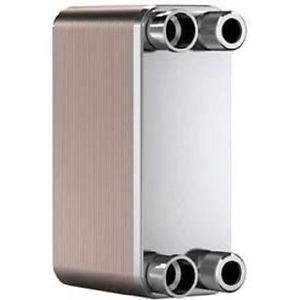
10″x20″ Brazed Plate Heat Exchangers

Price range: $ 1,171.85 through $ 9,735.90

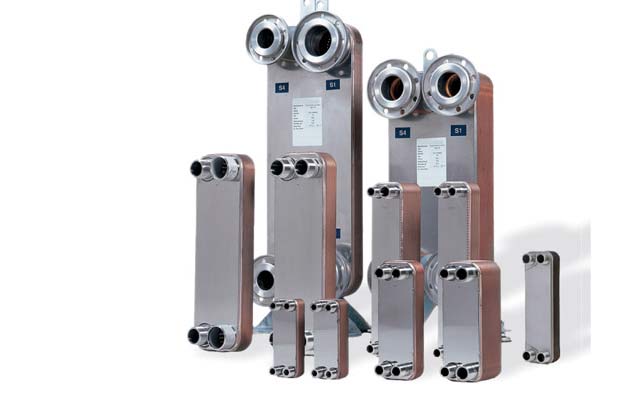
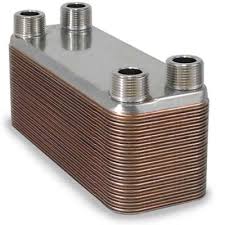
The 10″x20″ Brazed Plate Heat Exchanger (BPHE) is a compact, high-performance liquid-to-liquid heat transfer device featuring 316L stainless steel plates vacuum-brazed with copper. Measuring approximately 9.8″ wide by 20.3″ long, these units deliver exceptional thermal efficiency through turbulent chevron plate patterns while occupying a fraction of the space of traditional shell-and-tube exchangers.

Available from 10 to over 200 plates with 1-1/2″ or 2″ connections, they handle pressures up to 450 psi and temperatures from -256°F to 437°F. Ideal for hydronic heating, domestic hot water, wood boiler isolation, pool heating, refrigeration, and industrial processes, they offer leak-proof reliability, low maintenance, and outstanding heat transfer in demanding applications.

Description

The 10″x20″ Brazed Plate Heat Exchanger (BPHE) offers compact, high-efficiency liquid-to-liquid heat transfer.
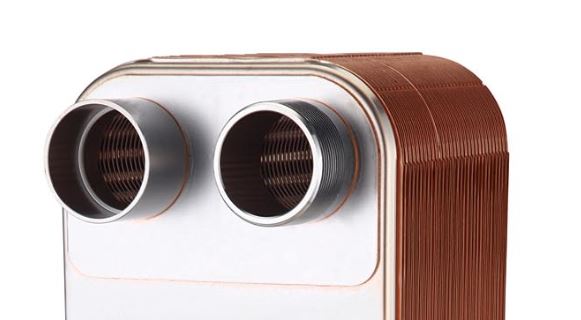
Engineers stack multiple corrugated 316L stainless steel plates and join them permanently through vacuum brazing.
The chevron pattern on each plate creates strong turbulence.
This design boosts heat transfer rates and keeps pressure drops low.
As a result, these units outperform traditional shell-and-tube exchangers in many applications.

The gasket-free brazed construction eliminates leak risks.
It also resists vibration and thermal shock effectively.
These exchangers handle pressures up to 450 psi and temperatures from –256°F to +437°F.
Their small size (about 9.8″ wide by 20.3″ long) fits tight spaces easily.
Low internal volume allows fast thermal response and reduces fluid needs.

Key Features

Feature Benefit
Chevron Plate Pattern Creates high turbulence for superior heat transfer
Gasket-Free Brazed Design Eliminates leaks and reduces maintenance
Compact Footprint Fits tight spaces and lowers installation costs
High Pressure & Temperature Rating Handles demanding industrial and HVAC conditions

Materials

Component Standard Material Alternative Options Best For
Plates 316L Stainless Steel Higher-grade SS or Titanium Corrosive fluids, seawater
Brazing Copper (99.9% pure) Nickel Aggressive chemicals, ammonia, high chlorides
Connections 316L Stainless Steel Custom alloys High-corrosion environments

Proper filtration and fluid treatment keep these units performing well for many years.
Overall, 10″x20″ BPHEs combine high performance, reliability, and versatility in one compact package.

Additional information

Weight 00 lbs
Dimensions N/A
Connection Size

1-1/2", 2"

Type of Connection

Flanged (Class150), Threaded (MNPT), Tri-Clamp (Sanitary)

Plate Count

10 (350,000 BTU/HR), 20 (700,000 BTU/HR), 30 (1,050,000 BTU/HR), 40 (1,400,000 BTU/HR), 50 (1,750,000 BTU/HR), 60 (2,100,000 BTU/HR), 70 (2,450,000 BTU/HR), 80 (2,800,000 BTU/HR), 90 (3,150,000 BTU/HR), 100 (3,500,000 BTU/HR), 110 (3,850,000 BTU/HR), 120 (4,200,000 BTU/HR), 130 (4,550,000 BTU/HR), 140 (4,900,000 BTU/HR), 150 (5,250,000 BTU/HR), 160 (5,600,000 BTU/HR), 170 (5,950,000 BTU/HR), 180 (6,300,000 BTU/HR), 190 (6,650,000 BTU/HR), 200 (7,000,000 BTU/HR)

Materials

Copper/316SS

BTU Rating

60,000, 97,000, 121,000, 146,000, 170,000, 194,000, 218,000, 242,000, 267,000, 291,000, 350,000, 2,100,000, 2,450,000, 2,800,000, 3,150,000, 3,500,000, 4,900,000, 5,250,000, 5,600,000, 5,950,000, 6,300,000, 6,650,000, 7,000,000

Plate Size

10"x20"

Specifications

Parameter Detailed Specifications
Plate Size Nominal 10″ × 20″ (Actual: ~9.8″ width × 20.3″ length)
Number of Plates 10 to 200+ plates (custom configurations available)
Plate & Braze Material 316L Stainless Steel plates with 99.9% Copper brazing (Nickel brazing optional for aggressive fluids)
Port Connections 1-1/2″ MPT (smaller models) or 2″ MPT (larger models); wide spacing (~6.75″ center-to-center) for easy piping
Design Pressure 435–450 psi (30 bar) working pressure; test pressure up to 652 psi
Temperature Range -256°F to +437°F (-160°C to +225°C)
Maximum Flow Rate Up to 184 GPM (depending on plate count and port size)
Heat Transfer Area (Number of plates – 2) × 0.12 m² per unit (approx. 1.29 ft² per plate pair)
Channel Volume Varies with plate count; low hold-up volume for fast response
Mounting & Features Four threaded mounting studs on front cover; optional floor brackets/frames; heavy-gauge end plates
Approvals & Certifications UL Listed (standard), ASME (optional), CRN, CE/PED (optional)
Typical BTU Rating 350,000 BTU/hr (10-plate) up to 7,000,000+ BTU/hr (200-plate) at standard conditions

Installation Procedures

Step Installation Procedure
Location & Mounting Install in a clean, accessible area with adequate space for piping and maintenance. Use the four built-in mounting studs on the front cover or optional brackets/frames. Ensure the unit is level and properly supported.
Orientation Can be mounted vertically or horizontally. For optimal performance and air venting, vertical mounting with counter-flow configuration is recommended.
Piping Connections Connect inlet/outlet ports using appropriate fittings (1-1/2″ or 2″ MPT). Use wide port spacing advantage. Install shut-off valves, pressure gauges, and thermometers on both sides. Ensure counter-flow arrangement for maximum efficiency.
Filtration & Protection Install strainers or filters on both fluid sides to prevent debris from entering the narrow channels. Add expansion tanks and pressure relief valves as needed for closed systems.
Initial Flushing & Filling Flush both sides thoroughly with clean water before operation. Fill the system slowly to remove air. Check for leaks at all connections.
Startup & Testing Start pumps at low flow, gradually increase to design rates. Monitor pressure drop, temperatures, and for any unusual noise or vibration. Verify performance against design specifications.

Maintenance Procedures

Activity Maintenance Procedure
Daily / Weekly Checks Monitor inlet/outlet temperatures, pressures, and flow rates. Check for unusual noise, vibration, or external leaks. Record pressure drop across the unit.
Monthly Inspection Inspect all piping connections and mounting points. Verify strainers/filters are clean. Check system fluid quality (pH, hardness, and treatment levels).
Quarterly Maintenance Clean or replace suction strainers. Perform a visual inspection of the heat exchanger exterior. Measure and record pressure drop to detect early fouling.
Annual / As Needed Chemically clean (CIP) the unit using approved descaling solutions if pressure drop increases or performance drops. Flush thoroughly afterward. Inspect for corrosion.
General Recommendations Always maintain proper fluid treatment and filtration. Do not exceed design pressure or temperature. Never disassemble the brazed unit. Keep spare strainers and cleaning chemicals on site for quick response.
Winterization (Cold Climates) Drain or use glycol mixtures in systems exposed to freezing temperatures. Follow manufacturer guidelines for long-term storage.

Q&A

Question Detailed Answer
What is a 10″x20″ Brazed Plate Heat Exchanger? It is a compact, high-efficiency heat exchanger made of multiple 316L stainless steel plates vacuum-brazed with copper. The “10×20″ refers to the nominal plate size (~9.8″ x 20.3”). It transfers heat between two fluids without mixing them, using a chevron pattern for turbulent flow and superior performance.
What pressure and temperature can it handle? Design pressure up to 435–450 psi (30 bar) and temperature range from -256°F to +437°F (-160°C to +225°C). It is ideal for high-pressure hydronic and industrial systems.
How many plates are available? From 10 plates (small residential) up to 200+ plates for large commercial/industrial duty. More plates increase heat transfer area and capacity.
What are typical connections? 1-1/2″ MPT for smaller units and 2″ MPT for larger plate counts. Wide port spacing (~6.75″ center-to-center) simplifies piping installation.
Can it handle solids or dirty fluids? It performs best with clean fluids. Use proper filtration and strainers. Fouling reduces efficiency; chemical cleaning (CIP) is recommended as the unit cannot be disassembled.
Is copper brazing suitable for all applications? Copper is excellent for most water and hydronic applications. For aggressive fluids (high chloride, ammonia, or seawater), choose nickel-brazed versions for better corrosion resistance.
How does it compare to shell & tube exchangers? Much more compact (often 1/5–1/6 the size), higher efficiency, lower hold-up volume, and easier installation. It is also lighter and requires less space and insulation.
What maintenance is required? Very low maintenance. Keep fluids clean, check for pressure drops periodically, and perform chemical cleaning when needed. No gaskets to replace.
Common applications? Outdoor wood boiler isolation, radiant floor heating, domestic hot water, pool/spa heating, snow melt, refrigeration evaporators/condensers, geothermal, and industrial process cooling.
What approvals does it typically carry? UL Listed (standard), with optional ASME, CRN, and CE/PED certifications for code-compliant installations.

Advantages / Disadvantages

Category Advantages Disadvantages
Design & Efficiency Exceptional heat transfer efficiency thanks to turbulent chevron plate design
Very compact footprint — often 1/5 to 1/6 the size of shell & tube units
Close temperature approach (as low as 2–5°F) possible
Low fluid hold-up volume for fast thermal response
Cannot be opened for mechanical cleaning (CIP only)
Efficiency drops quickly if fouling or scaling occurs
Durability & Reliability Gasket-free, permanently brazed construction — virtually leak-proof
High pressure (up to 450 psi) and wide temperature range (-256°F to 437°F)
Excellent resistance to vibration and thermal shock
Long service life with minimal maintenance
Fixed capacity — plates cannot be added or removed later
Not ideal for fluids with high solids or severe fouling without proper filtration
Installation & Cost Lightweight and easy to install with built-in mounting studs
Lower installation costs due to small size and simple piping
Wide port spacing for convenient connections
Often lower total ownership cost than larger traditional exchangers
Higher initial cost per unit compared to basic shell & tube in some low-duty applications
Requires careful fluid quality management to prevent internal fouling

Applications

Industry / Sector Common Applications
Residential & Light Commercial Heating Radiant floor heating, domestic hot water production, boiler isolation, and snow/ice melt systems. Perfect for separating outdoor wood boilers from indoor pressurized loops.
Swimming Pools & Spas Pool water heating from boilers, heat pumps, or solar systems. Nickel-brazed models recommended for chlorinated or saltwater applications.
Refrigeration & HVAC Evaporators and condensers in chillers, heat pumps, and refrigeration systems. Used for water/glycol cooling and heat recovery.
Industrial Processes Oil cooling, process fluid heating/cooling, heat recovery from wastewater or exhaust, and chemical/process water temperature control.
Renewable Energy Geothermal heat pumps, solar thermal systems, biomass boiler isolation, and waste heat recovery applications.
Food & Beverage / Dairy Pasteurization, CIP heating, product cooling, and hygienic fluid temperature control (with proper material selection).
Marine & Specialized Engine cooling, hydraulic oil cooling, and ballast water temperature control on vessels.

Downloads

Drawings

You may also like