
Forged Cryogenic Gate Valves

Forged Cryogenic Gate Valves

Forged Cryogenic Gate Valves are linear-motion isolation valves designed for extremely low-temperature service.
They feature a forged body that delivers high strength and excellent integrity under pressure and thermal cycling.
An extended bonnet and stem keep the packing and actuator away from the cold fluid, preventing freezing of the seals.
When the gate is raised, the flow path is fully open with minimal pressure drop. When lowered, the gate provides tight shut-off against the seats.

These valves handle fluids such as LNG, liquid nitrogen, oxygen, argon, and hydrogen at temperatures down to –196°C (–320°F).
Cavity-relief designs protect the body from pressure buildup as trapped liquid warms and expands.
Built to standards such as BS 6364 and ASME B16.34, they offer reliable isolation in LNG terminals, industrial gas plants, aerospace systems, and cryogenic storage applications.

~148 words

This product is currently out of stock and unavailable.

Description

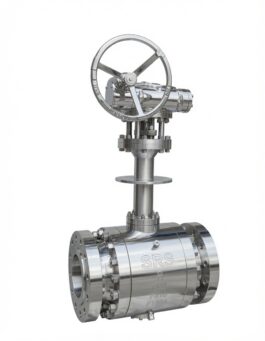
A Forged Cryogenic Gate Valves is a linear-motion isolation valve designed for extremely low-temperature service.
It uses a forged body for superior strength and integrity under high pressure and thermal cycling.
The valve features an extended bonnet and stem that keep the packing and actuator away from the cryogenic fluid.
When the gate is fully raised, flow is unrestricted; when lowered, the gate seals tightly against the seats to provide reliable shut-off for fluids such as LNG, liquid nitrogen, oxygen, argon, and hydrogen at temperatures down to –196°C (–320°F) or lower.

How a Forged Cryogenic Gate Valves Work

The valve contains a gate (usually a solid or flexible wedge) that moves linearly up and down inside the forged body.
Turning the handwheel or actuator raises or lowers the stem, which is connected to the gate.
In the fully open position the gate is completely out of the flow path, creating minimal pressure drop.
In the closed position the gate seats tightly against the body seats to stop flow.
An extended bonnet raises the packing box well above the cold zone so the packing does not freeze.
A cavity-relief design or special seat arrangement vents pressure that builds when trapped cryogenic liquid warms and expands, protecting the valve body from over-pressurization.

Specifications

Parameter Typical Specifications
Body Construction Forged body (usually one-piece or bolted bonnet design)
Temperature Range –196°C to +80°C (–320°F to +176°F); special designs lower
Body & Bonnet Materials Forged stainless steel (F316 / F316L, F304 / F304L) or special cryogenic alloys
Gate & Stem 316 Stainless Steel or hard-faced; extended rising stem
Seat Materials Stellite, PTFE, PCTFE, or metal-to-metal for severe service
Pressure Rating Class 150 to Class 2500 (PN 16 to PN 420)
Size Range ½” to 24″ (DN 15 to DN 600) and larger
End Connections Flanged (RF/RTJ), Butt-weld, Socket-weld, or Threaded
Standards BS 6364, ASME B16.34, API 600 / API 6D, API 607 (fire-safe), ISO 15848
Special Features Extended bonnet, cavity pressure relief, anti-static design, drip plate

Installation Procedures

Step Installation Procedure
Orientation Install with the stem vertical whenever possible. This keeps the packing in a warmer zone and allows proper drainage of the body cavity.
Piping Support Support the pipeline independently so the valve does not carry pipe weight or stress. Use cryogenic-rated supports and insulation.
Welding / Connections For butt-weld ends, use qualified cryogenic welding procedures. Protect seats and seals from heat during welding. Flush the system thoroughly before commissioning.
Insulation Insulate the valve body and pipeline carefully, but leave the extended bonnet and packing area accessible and free of insulation.
Actuator Mounting Mount actuators only after confirming stem alignment. Use cryogenic-rated actuators and ensure torque values match low-temperature requirements.
Pre-Cooling & Testing Cool the system gradually to avoid thermal shock. Perform leak tests with inert gas before introducing cryogenic fluid. Verify cavity relief function.

Maintenance procedures

Activity Maintenance Procedure
Daily / Routine Checks Inspect for external ice formation, unusual frost patterns, or packing leakage. Confirm free stem movement and proper actuator response.
Periodic Inspection Check packing gland adjustment. Verify that the extended bonnet remains free of ice buildup. Inspect insulation integrity around the valve body.
Seat & Seal Service Replace seats and packing only with cryogenic-rated materials. Follow manufacturer torque and assembly procedures carefully.
Cavity Relief Check Periodically verify that the cavity relief feature functions correctly to prevent over-pressurization during warm-up cycles.
Major Overhaul Disassemble only when the system is fully warmed and purged. Inspect gate, stem, seats, and sealing surfaces. Reassemble with new soft parts.
General Tips Never force a frozen stem. Always warm the valve gradually if ice forms. Keep detailed records of thermal cycles and maintenance history.

Q&A

Question Answer
Why use a forged body for cryogenic gate valves? Forged bodies offer higher strength, better grain structure, and greater resistance to thermal cycling and high pressure compared with many cast designs.
Why does it need an extended bonnet? The extended bonnet keeps the packing and stem seals above the cold zone so they do not freeze and lose sealing ability.
What is cavity relief and why is it needed? When cryogenic liquid trapped in the body cavity warms and expands, pressure rises rapidly. A relief feature vents this pressure back to the pipeline, preventing body rupture.
Can a standard gate valve be used for cryogenic service? No. It must have an extended bonnet, cryogenic materials, cavity relief, and proper low-temperature seats to operate safely.
Is a gate valve suitable for throttling? No. Gate valves are designed for on/off isolation only. Operating them in a partially open position can damage the seats and gate.

Advantages / Disadvantages

Category Advantages Disadvantages
Design & Strength Forged body provides high strength and pressure integrity
Extended bonnet keeps packing away from cold fluid
Full-bore design offers low pressure drop when open
Slower operation than quarter-turn valves
Larger stem travel requires more space for actuation
Safety & Performance Excellent isolation and tight shut-off at cryogenic temperatures
Cavity relief prevents dangerous pressure buildup
Suitable for high-pressure cryogenic service
Not suitable for throttling service
Seats can wear if operated partially open
Maintenance & Cost Robust forged construction offers long service life
Reliable performance under thermal cycling
Compatible with manual, electric, or pneumatic actuators
Higher initial cost than standard gate valves
Extended bonnet requires additional installation space

Applications

Industry Common Applications
LNG & Natural Gas LNG storage tanks, loading/unloading systems, vaporization plants, and pipeline isolation
Industrial Gases Liquid nitrogen, oxygen, argon, and hydrogen storage and distribution systems
Aerospace & Defense Rocket propellant systems, liquid oxygen and hydrogen handling
Medical & Laboratory Cryogenic freezers, liquid nitrogen supply lines, and research facilities
Chemical & Petrochemical Cryogenic process streams and low-temperature isolation service
Energy & Power Peak-shaving plants, regasification terminals, and cryogenic energy storage

Drawings

Download

Reviews

There are no reviews yet.


Only logged in customers who have purchased this product may leave a review.

You may also like